Showing posts with label Math. Show all posts

Saturday, July 2, 2016

An awesome find at Goodwill!

First I willingly and excitedly spent my money at Lakeshore Learning for my classroom.
Then I started willingly and excitedly spending my money at Target and Dollar Stores for my classroom.
Now I'm willingly and excitedly searching for treasures and spend little money at local Goodwill and thrift stores!

The other day I found a new building treasure that I've never seen before and my kids have been happily testing out.


The box is old and the copyright is 2006 but upon Googling it, I'm happy to say they are still for sale and look like this:
You can order them online from Amazon, Walmart and Fat Brain Toys (my new favorite online spot for classroom building things, toys, etc.) for anywhere from $12 to $30.

This video is great and shows some more (math) ideas for how to incorporate it into your classroom.


Monday, June 27, 2016

Build It

Over the past few years, as both a teacher and person, I've developed a love of building things!  It's such a great creative outlet for all the ideas swirling around in my head.


When I dove into doing small math groups 2 years ago, I started looking for and collecting  building-type manipulatives that my students could use for an independent building group.  Now I love to stumble upon new ones when I'm out and about and on vacation. I found an awesome toystore recently in Hopkins, Minnesota and ended up buying 2 new building manipulatives.  And I've finished up a building activity card set that comes with a list (pictures and links) of all 18 different manipulatives that I've found!


Most of my student's favorite thing about our classroom is our small math groups and the B for Building group.  I also leave an old iPod out so kids can take pictures of their creations.  They can have a friend take it, do a selfie, or put their name tag next to it so I can tell who made it.  And then on my website,  I post the pictures so parents and relatives can see (plus it's great motivation for kiddos).

If you know of a building material that is NOT on my list (that is suitable for this activity) please let me know and I'll add it and reward you for sharing :-)


Tuesday, February 17, 2015

LEGO Challenges & Snowman Cupcakes

A couple of weeks ago my 6-year-old was having a meltdown and I had her sit down with me and just quietly put together LEGOs and it was awesome!  She calmed down and we were able to talk through the incident and I gave birth to an idea for my small math groups: LEGO Challenges!
I wanted my students to use LEGOs creatively yet with some structure, so I created 30 task cards and a checklist for students to keep track of which ones they try and complete.
I love to take pictures of students with their finished creations and put them on my website so families can see what we're up to.

Check it out by clicking here.


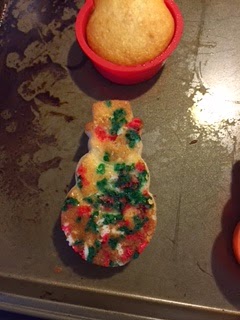
And now on to tastier things: snowman cupcakes!  I bought some really cool silicone cupcake molds (on Ebay) to use with our snowman unit. I finally tried them out at home and they turned out so well!
I sprayed them with cooking spray just in case...


They came out SOOOOO easily!


You can find them on Ebay and they're super affordable!


Monday, January 26, 2015

Small Math Groups: C is for Computers

While I love technology and consider myself a quick learner and pretty savvy, our students are 'Digital Natives' (while we are 'Digital Immigrants'....at least we're not 'Digital Dinosaurs') and, in my opinion, need structured computer time that allows not only for concept/skill practice, but for some creativity as well.


The last of my 5 small math groups is computers.  Currently, students start by doing ExtraMath and if they finish that early then they can go on to the 1st grade math games on ABCya. There is another site, Oswego, that is awesome that I haven't introduced yet.
ExtraMath
ExtraMath

Here's how I manage the Who and When of computer time:
Since we have 5 classroom student computers, I sorted the kids into 5 groups.  I tried to spread kids out based on ability level so it would work with the groups I'm seeing for my lesson.  The paperclip denotes whose turn it is.  When a rotation is done, the student on the computer must come up to the board and move their paperclip down.  They must then go find that student and ask if they have had computer time.  If the student is with me, then they skip down to the next person.  I find that I am still having to remind students to move their paperclip and usually during round 4 I check to see who has not had computer time and try to remedy it.


I used my small group time last Friday to introduce and explain The Race to 1,000, which is a traditional thing we do in 1st grade at my school.  If you'd like to learn more about it, click here
I spent Friday evening making a track that I could laminate and use again and again instead of setting it up piece by piece each year.
Students designed their own race cars.
I have 4 students already on lap 2 by the end of the day!

Last week of January, wow!
Have a great one!


Monday, January 19, 2015

Small Math Groups: G is for Games

A year ago, our district switched from Everyday Math, which had a HUGE focus on game playing for concept/skill practice, to GoMath, which doesn't focus on playing games and what they do have just isn't good.  

It made me sad to not be able to incorporate all of the games that I had made and purchased over the years to go with my math instruction.  Throughout the first quarter of this school year I kept thinking about all those math games in my cupboard and was excited to make them a regular, daily, part of my new math instruction!

One of the games I made when we were working on Fact Families.
At least one new game is introduced a week, if not more.  It just depends on what we're learning, what games I have and if the game needs an adult to facilitate or not.  Having kids play games they already know (and are kept at our math station) helps reinforce concepts/skills and is one less thing I have to plan for the rotations.
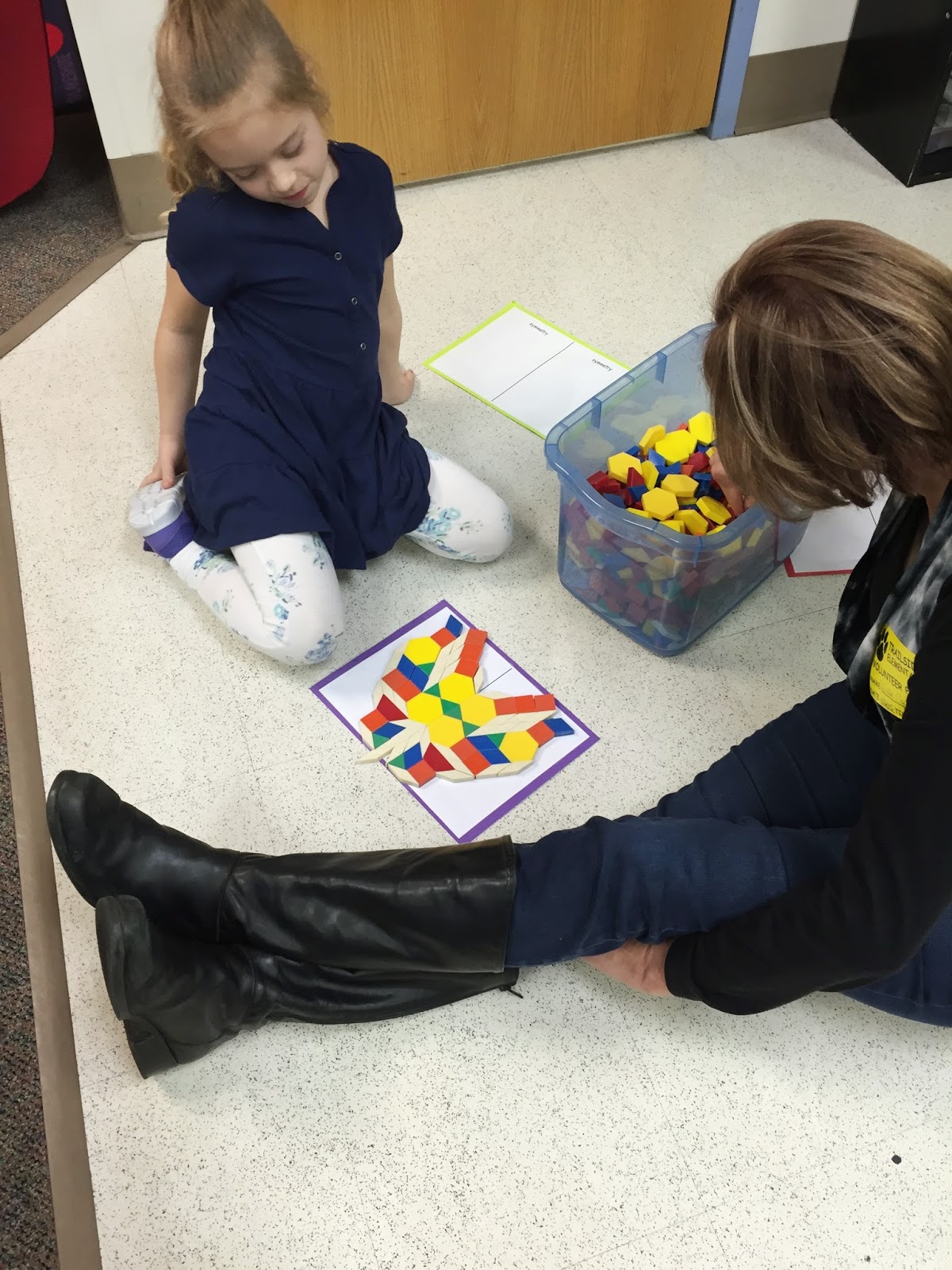
Playing a symmetry game called 'Copy Cat' with a parent volunteer.
I forgot to share this in my "L is for Learning" post, but here is how I keep track of the timing of my groups.  I use my iPad mini and an AWESOME app called Best Sand Timer.  You can change the color and music, so I use it for both my small reading and math groups and just have different music for each.


Friday, January 16, 2015

Small Math Groups: O is for On your own

O is for On your own. . .
Since my core instructional time is limited to 10-15 minutes so we can do 5 rotations, this is the independent practice group. The last 30 seconds of my lesson is previewing the independent practice page.  Our curriculum, Go Math!, does have a student workbook but I've never been one to rely solely on the curriculum.  Every good teacher knows that you have to supplement when necessary.  So I decided to use notebooks as our Math Workbooks and students glue each practice page in.
I created this first page to show students that math is multi faceted and we highlight each broad concept as we learn about and practice it.
Students write the page numbers on each page and turn it in to our Math Workbook basket when completed.  The current page number is always displayed on our Math BLOGC board.

I correct and return the Math Workbooks after school.  If a student finds their returned workbook upside down it means that their work was good and nothing needs to be fixed.  But if it's returned opened and upside down then they know there is something(s) to fix and must do so the next day during Morning Work time.
I got this stamp at Lakeshore years ago and it's served its purpose very well.
When I'm finished teaching my 3 core instruction groups, there are still 2 rotations left so I use that time to meet one-on-one or with a few students who want help with their workbook.  We meet on the carpet in, what was, my teaching space. 

Previewing the page, in 30 seconds, by showing them MY workbook page (which always has 1 problem completed) really helps kids understand what is expected of them and sets them up for independent success.  I am also to take grades from all of these assignments and put them in my grade book (our district has a weekly requirement about how many grades teachers should have entered).

The content of this Math Workbook comes from 3 sources: Go Math! workbook pages, me (creating things to fit my lessons and meet my student's needs) and Jaime Pink's Interactive Math Notebook. 
I can't tell you how much I enjoy the structure of these groups and again how much better I feel I'm teaching, reaching and inspiring my students as mathematicians!


Wednesday, January 14, 2015

Small Math Groups: L is for Learning


L is for Learning. . .
This means I get to meet with anywhere from 6-10 students at a time to deliver my core instruction.  The groups change from concept to concept, unit to unit.  The pro: I get to teach and assess my student's math skills much more closely than in a whole setting.  The con: I only have 12 minutes to do so and I'd love to have more time (especially for the guided practice part of it) but it has to be this way due to all my other groups being independent and also needing my instruction.
The proof is in the pudding: My lowest student, in a small group setting, is able to show me much better and more often that she is grasping the skills and concepts I'm teaching!  This was not the case earlier this year because she got lost in the group when it was the entire class.  

Something else I really like about teaching math in a small group is that I choose to use the last 30 seconds of my group to show and explain the independent practice that they will do immediately following my group.  I show them my Math Workbook, which I always do one part of the assignment so they can see exactly what the written directions mean.  

The proof is in the pudding: One of my behavior challenges has his best behavior and attitude when he comes to see me in small group and I truly think it's because he's getting more of me to himself.

How, you ask, do I manage the behavior and noise of the majority of my class while actively teaching the minority of my class?  This was my first "Uh oh!" and subsequent wake up call.  This group of kids I have this year is tough and exhausting but they are really motivated by rewards so we play a game every day during the first 3 (of 5) rotations.  It's me versus the students...don't have  a catchy name yet.  I have 2 buzzers right next to me as I teach (I sit on the carpet in front of my SmartBoard to teach but don't use the SmartBoard).  If it's too loud, I hit the red buzzer and earn a point.  One of the kids in the group that I'm teaching gets to keep track of the points (tallies) on a little whiteboard next to us.  If it's really calm and quiet then I hit the blue buzzer and students earn a point.  Whomever wins at the end of the third round gets a little piece of candy to suck on. . .because, my theory was, if they are sucking on candy they are not talking or making noise.
How, you ask, do I manage to continue teaching when students who are not in my group come up to ask me a question or get help?
This is a magnetic tap light that I wrote on....Pinterest idea!
I found this necklace at a dollar store in Montana but you could easily make one.
We do have to talk about how to be a problem solver when you really need help or have a question for Mrs. Locke but she's busy teaching.  Finding your own solution and asking a peer are the two most effective and efficient.


This quote sums up my feelings about teaching math in a small group:


Tuesday, January 13, 2015

Small Math Groups: B is for Building

BLOGC is how it's spelled and this is what it means:
B = building
L = learning
      O= on your own
G = game
               C = computer time

Instead of using my SmartBoard for these 5 rotations (like I do for my small reading groups), I made a chart that shows everything kids need to know about our groups each day.  I sewed the chart and used Velcro dots to attach everything.  I store it in a closet in my classroom and take it out when I need it.


When I starting planning for small math groups, the acronym STEM (Science, Technology, Engineering and Math) popped into my head.  Science is something I plan to integrate next quarter as our science kit is "Balancing & Weighing" which lends itself well to completing the activities during our small group math time.  The technology part has been grade level appropriate math games from abcya.com and just last week my students started using extramath.org to work on their math facts.  The engineering part is where I got B for Building.


I started looking all around town to find fun building materials for kids to use independently as one of our small groups.  My collection has grown and will continue to grow as I find more fun stuff!


At first, every time we did our groups, I just had all the materials out and available....which, I learned the hard way, was too much at once.  Now each day I choose 5-6 kids randomly to go pick out a building material.  This year, since this is all so new, they can just build whatever they want with the materials.  But next year I'd like to have more defined activities to complete with each material.  Next week, for example, we're only going to use LEGOs each day and kids can either follow the directions to build a pre-existing object -or- they can choose a card and then build whatever object is on the card (i.e. a robot, an airplane, a helicopter).  

Squishy sand and sand toys are our newest addition!
I'm hearing from parents and students that they LOVE math BLOGC, which is not how I feel my students felt when we did math whole group in front of the SmartBoard.  Doing math BLOGC is more time intensive for me, but it really is great for my students!